

How Much Does Solar Panel Installation Cost?
AVERAGE COST: $10,085 - $28,000
Solar panel installation costs around $18,500 for a 6kW solar panel system for a 1,500 square ft. home and the price per watt for solar panels can range from $2.50 to $3.50. Residential solar panels are usually sized at 3kW to 8kW and can cost anywhere from $9,255 and $24,552 in total installation costs. See average solar panel system costs by size (before tax credits or discounts).
GET FREE QUOTES| Solar Panel System Size | Average Solar Installation Costs |
|---|---|
| 2 kW | $6,015 |
| 3 kW | $9,225 |
| 4 kW | $12,035 |
| 5 kW | $14,893 |
| 6 kW | $18,500 |
| 7 kW | $21,008 |
| 8 kW | $24,552 |
Net metering
Net metering is where the amount of energy you buy in from the grid and the amount of excess solar energy you export to the grid are recorded separately and you are only billed for the net of these two numbers. So if you buy in 1000 kWh of electricity over a month at times when your solar is either not generating (nighttime), or not generating enough energy to cover all of your needs (say a cloudy day) but you export 500 kWh of energy to the grid in the same month at other times when your solar is producing more energy than your house is using, then you would be billed for only 500 kWh.
How do I calculate my savings from net metering?
Calculating the value of the net metering incentive with respect to a specific solar system is difficult because it is hard to tell how much of a solar systems total output will be generated at times when the electrical loads in the house are less than this output and by how much the system output will exceed the electrical needs of the house. As such most people don't really bother to calculate how much better off they are financially because of this one incentive they simply look at the overall savings from a system which is easy to calculate when you know the kWh output of the system annually and you know you will get full retail value for each of these kWh.
Federal Solar Tax Credit
The term “solar tax credit” actually refers to two separate things. First is the “Residential Energy Efficient Property Credit,” and second is the “Business Solar Investment Tax Credit,” but differentiating between the two is complicated. For simplicity, people in the solar industry just say “solar tax credit” or ITC.
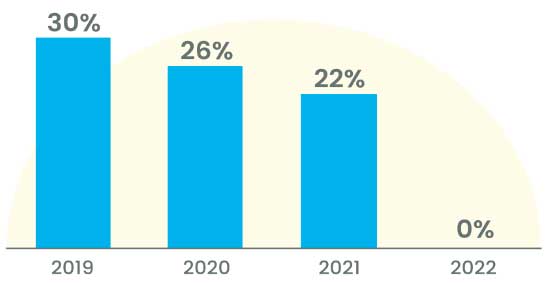
First enacted in 2005 as part of the Energy Policy Act of 2005, the solar tax credit began as a tax credit of 30 percent of the cost to install a solar panel system with a maximum credit of $2,000. In 2008, the ITC was reauthorized and the cap was lifted. In 2015, the ITC was extended, and scheduled to “step down” over time.
How does the federal solar tax credit work?Throughout 2020, the solar tax credit is equal to 26 percent of the cost to install a solar system, with no maximum credit amount. For example, an average-sized residential installation of solar panels in California costs about $17,000. The credit for that system would be 26% of $17,000, or $4,420.
For the remainder of 2020, the federal solar tax credit will equal 26% of the cost of installing a solar system before stepping down to 22% in 2021 and expiring completely for residential installations in 2022. After 2021, businesses can receive a 10% tax credit for installing solar panels.
Whether you can claim the full amount of the credit depends on a few factors.
Who is eligible for the federal solar tax credit?
Anyone who pays for a solar panel installation on a home or business they own can claim the solar tax credit, as long as they have tax liability in the year of installation. What this means is, you have to owe taxes during the same year as the installation in order to qualify for the solar tax credit.
You can’t take a credit larger than the amount of taxes you owe, because the ITC is a “non-refundable” tax credit. You can, however, claim the credit over more than one year, and carry any leftover amount forward to the next year.
It’s important to note that when it comes to the residential ITC, the IRS says your system has to be “placed into service” by the end of the year to qualify for that year’s tax credit, but they don’t define “placed into service.” We’d say that’s when your system is fully interconnected and permission to operate has been granted by your utility company.
If your solar panels are turned on and sending electricity to the grid on December 31st, you’re good, but otherwise, talk to a tax expert and be cautious.
How do you claim the federal solar tax credit?To claim the residential credit, complete Form 5695 along with Form 1040 when you file your income taxes. The instructions for Form 5695 are fairly easy to follow, and include a worksheet to help you figure out how much of the credit you can claim this year.
Find out how much state solar incentives will save you
Get StartedWhat is a solar carve out?
A solar carve out is a requirement within an overall renewable portfolio standard that a certain percentage of the utility companies requirement to buy power from renewable sources must come from solar power specifically. Some states even have a requirement that a small percentage must come from small scale distributed rooftop solar.
Where there is no solar carve out in a renewable portfolio standard then most of the requirement usually comes from wind and so there is usually not much value in SREC's in that state.
What is a solar feed-in tariff?
A solar feed-in tariff is when a specific rate of payment is applied to solar power that is exported to the public grid by a grid connected solar system.
A feed-in tariff may be higher or lower than the retail rate of power. Some states such as Rhode Island offer solar feed-in tariffs well above the retail rate of power but in many other states and in specific utility territories there are what is known as avoided cost solar feed-in tariffs where an amount is paid for solar energy exported to the grid that is less than the retail rate of power.
Why is a solar feed in tariff different to net metering?
In around 30 states of America there is net metering law. What this means is that for every 1kWh or solar power that you export to the grid that you get a credit for 1kWh to use at another time.
So to think about it in terms of a spinning meter it is a meter that spins forward when you suck electricity in from the grid (say at night) and spins backwards when you export excess solar energy back to the grid (during the middle of the day). The key thing is that at the end of the billing period you are only billed for the net difference. So if you buy 1,000 kWh hours from the grid but export back 800 kWh then your bill would be for 200 kWh. With a feed in tariff both the import and the export and recorded separately. You are billed for your purchased power at the retail rate and you are credited for your exported power at the feed in tariff rate which can be higher or lower than the retail rate.

